

Is investing suitable for families? And what exactly is the Cornèr Accumulation Fonds that Clanq is now offering? We spoke to someone who knows: Sascha Kever, CIO of Cornèr Bank, explains why you don’t need to fear market fluctuations when investing, why time is your most valuable ally, and how you can lay the foundations for your child’s financial freedom with monthly contributions.
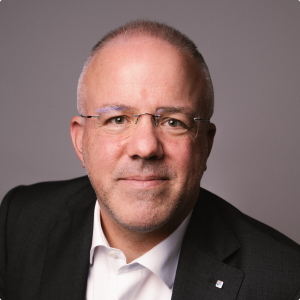
As Chief Investment Officer (CIO), Sascha Kever oversees the development and implementation of Cornèr Bank’s investment strategy.
Clanq: We’re currently seeing everything becoming more expensive. How can we ensure that our children’s savings will still be worth the same in 10 or 20 years’ time as they are today?
Sascha Kever: Inflation – that is, the trend of rising prices – is gradually eroding purchasing power. You can no longer buy the same amount of food with 100 francs today as you could 20 years ago. For over a decade, interest rates in Switzerland have fallen to near zero and have even been negative at times. This poses a significant disadvantage for anyone who keeps their money in a savings account. It therefore makes particular sense to invest money in real assets, such as shares. Whilst these do not offer perfect protection, they do provide effective indirect protection against inflation and are thus an essential component of long-term financial planning.
Clanq: Many parents are wary of stock market fluctuations. How should parents deal with the typical ups and downs of the economy?
Sascha Kever: Markets move in cycles – they never go up in a straight line. Investing always involves putting up with temporary price fluctuations. The important thing is: the past is never a guarantee of the future. But history shows us that those who invest for the long term usually come out on top.
With an investment horizon of at least 5 to 7 years, these cycles historically even themselves out. As parents usually have 10 or even 18 years to save for their children, this condition is met. Time is the decisive factor that mitigates risk.
Clanq: Many people wait for the «perfect moment» to enter the stock market – for example, when prices are low. Is that a bad idea?
Sascha Kever: The best time is as early as possible. As market movements cannot be predicted, waiting – for instance, for the next correction – often means missing out on the valuable time effect. The duration of the investment in particular tends to be the most important factor for returns and performance: the longer the investment period, the more likely you are to benefit from an attractive average price, thereby minimising the risk of an unfavourable entry point.
Clanq: Which investment is the better choice for children’s future – a single share or a fund?
Sascha Kever: A fund contains a wide variety of different securities, thereby significantly reducing risk. You are not dependent on the performance of a single share or a small group of stocks, but benefit from the performance of the entire market. This is ideal for a savings plan, as you do not have to constantly monitor the markets yourself.
One might think that investing in a single, currently solid company offers a long-term guarantee. However, stock market trends show that many market leaders from the start of this century now play hardly any role at all. At the same time, new sectors and companies are constantly emerging and growing rapidly. With a fund, you are automatically broadly diversified and participate in these new developments.
Clanq: The Cornèr Accumulation Fonds is actively managed. What does that mean?
Sascha Kever: There are active and passive funds. The latter aim to replicate the market in which they invest on a one-to-one basis by tracking the performance of a specific index.
An actively managed fund, on the other hand, aims to achieve a return that exceeds that of the benchmark market. This is achieved through targeted decisions by the fund management team, which sets priorities based on market analysis and the specific selection of individual shares. Due to this active selection process and continuous market analysis, actively managed funds generally involve slightly higher costs. However, one can expect a higher return.
Clanq: The Cornèr Accumulation Fonds offers two risk profiles, Swiss Dynamic and Global Dynamic. What is the difference?
Sascha Kever: The two funds differ primarily in their regional focus and their specific investment philosophies. The CB-Accent Lux Swiss Equity focuses entirely on the Swiss market. The aim of this fund is to invest specifically in shares of domestic companies, with selection based on fundamental analysis. The main focus is therefore on closely examining the economic fundamentals and key figures of Swiss companies in order to identify the most attractive stocks for the portfolio.
In contrast, the CB-Accent Lux AcrossGen Global Equity Fund takes a global approach with a very specific strategy. As the name «Across Generation» suggests, this fund invests globally in companies that are predominantly owned by the founding families and are often managed across generations. Such family businesses are typically characterised by their long-standing experience, a shared decision-making culture and close relationships built on trust.
Clanq: How do the two funds differ in terms of risk and price fluctuations?
Sascha Kever: The Swiss equity market is generally characterised by lower volatility and particular resilience. At the same time, the structure of the Swiss economy means that the market has a lower weighting in the technology and growth sectors, which is why the Swiss product tends to be regarded as less risky.
The global fund, on the other hand, offers broader sectoral and currency-specific diversification, as it reflects a more diverse economy. The management team employs an active strategy here: through targeted stock selection, they seek out industry leaders that demonstrate a clear competitive advantage, a solid balance sheet and above-average growth potential. As this fund invests globally and thus covers a broader spectrum, its performance tends to be slightly more volatile than that of the Swiss fund.
Generally speaking, the longer and more diversified your investment, the higher the expected returns and the lower the risk.
Clanq: We often save for specific goals such as our children’s studies or their first home. Why isn’t a savings account sufficient for this?
Sascha Kever: Anyone who simply leaves their savings in an account benefits from very low potential returns, which are often not even sufficient to maintain the purchasing power of the capital. It is therefore likely that funds set aside today, for example for education or as a deposit on a first small flat, will no longer serve the same purpose in 20 years’ time. Investments, on the other hand, enable you to participate in the development of the economy and the markets, and, not least, offer important protection against the erosion of purchasing power.
Clanq: What are the typical mistakes or risks that families should avoid when making a long-term investment?
Sascha Kever: Essentially, four main factors can be identified: Firstly, broad diversification is crucial; one should not put all one’s eggs in one basket, especially if that single product lacks sufficient diversification.
Secondly, one should not be guided by emotions. Markets can experience periods of high volatility – such as in the recent past during the pandemic or as a result of geopolitical tensions – but have, so far, always recovered significantly. A panic sell-off is therefore neither rational nor advisable.
Thirdly, it is important to keep an eye on the effects of inflation and the costs incurred, as these can erode part of your capital over the long term.
Finally, you should always invest only within the limits of your own financial means. This helps you avoid being forced to sell during financially difficult periods, which could jeopardise your entire investment plan.
Conclusion: The best time to invest is now
As Sascha Kever made clear in the interview, time is the most important factor when it comes to investing. Those who are saving for their children have the luxury of a long investment horizon – and thus the chance to sit out market fluctuations calmly and benefit fully from the compound interest effect.
The traditional savings account is a useful addition, but for the big dreams of tomorrow – be it university, a first home or financial independence – an inflation-proof solution is needed.
Interested? Secure 250 CHF in start-up capital for your investment account. Find out more at: clanq.ch/en/invest